
In Argentina, eating has never been just about staying alive. It’s about gathering, laughing, stretching good moments, and yes, sometimes dripping empanada juice down your shirt when you least expect it. As culinary hosts who dedicate our lives to sharing this culture, we see this magic happen every single night in our dining room.
Argentine food is the beautiful result of many cultures blending together: Italian pizzas and pastas, Spanish stews and tapas, indigenous ingredients, and so much more. The outcome is a table full of dishes that feel both comforting and unique. We don’t just write about these flavors; we cook them, serve them, and share the history behind them with our guests every evening.
In this article, we’ll walk you through our curated selection of Argentine cuisine classics: the asado, the perfectly stuffed empanada, and the sweet indulgence of dulce de leche. Here you will not only learn what they are, but when and how locals actually enjoy them. And if you don’t feel like running an endless scavenger hunt across the city to try each one separately, don’t worry: we’ll also share where you can pull up a chair and taste them all in a single, unforgettable night.
What to Eat in Buenos Aires: Iconic Argentine Dishes
Asado: The Heart of Every Gathering
If there’s one answer to what to eat in Buenos Aires (or any other Argetine spot actually), it’s the asado. But here is the local secret: in Argentina, you don’t just eat an asado; you go to an asado. It is a full-blown ritual celebration. It’s about friends gathering, bottles of wine being poured, Fernet being passed around, and an anticipation that ends with a mandatory round of applause for the grill master (“¡un aplauso para el asador!”).
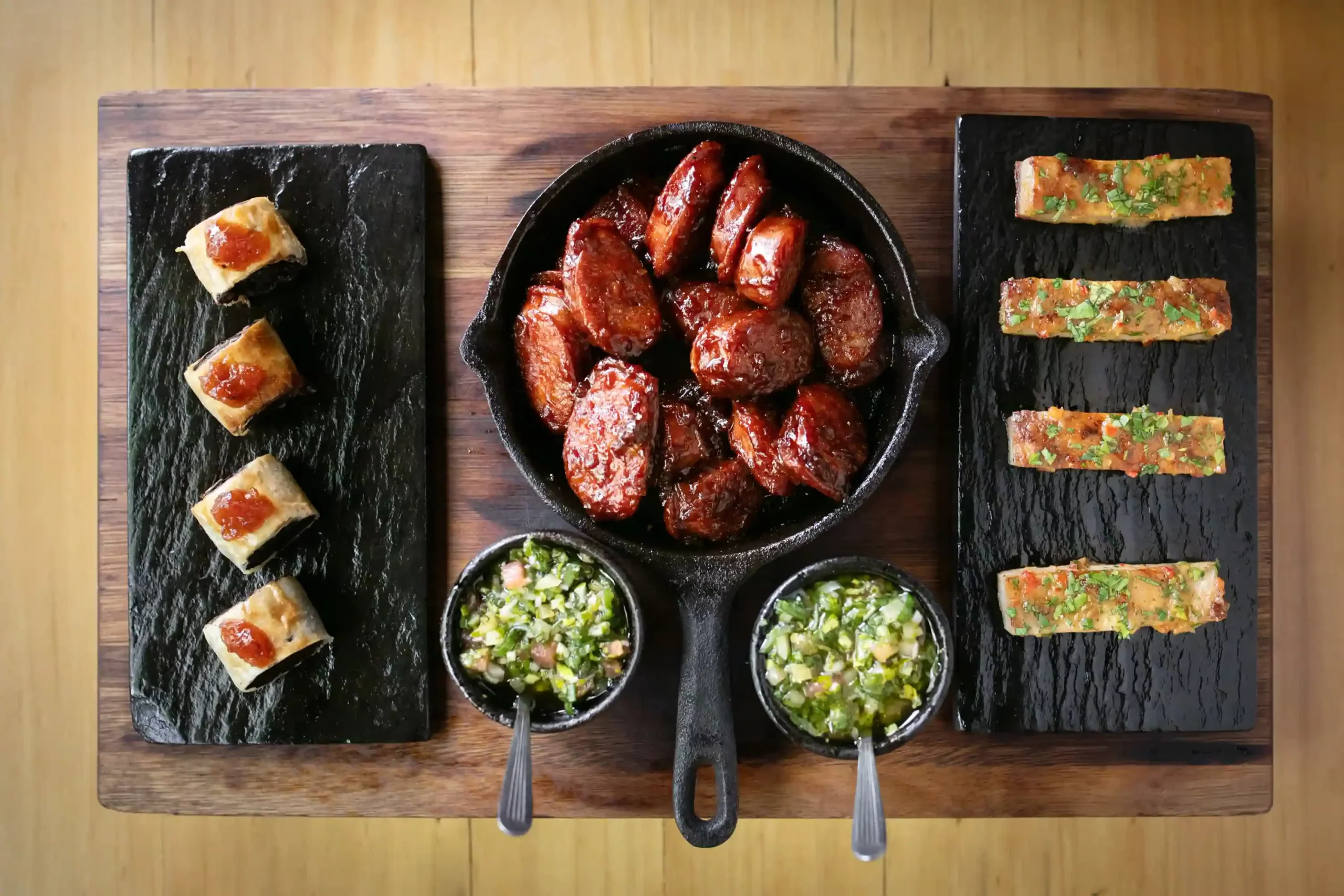
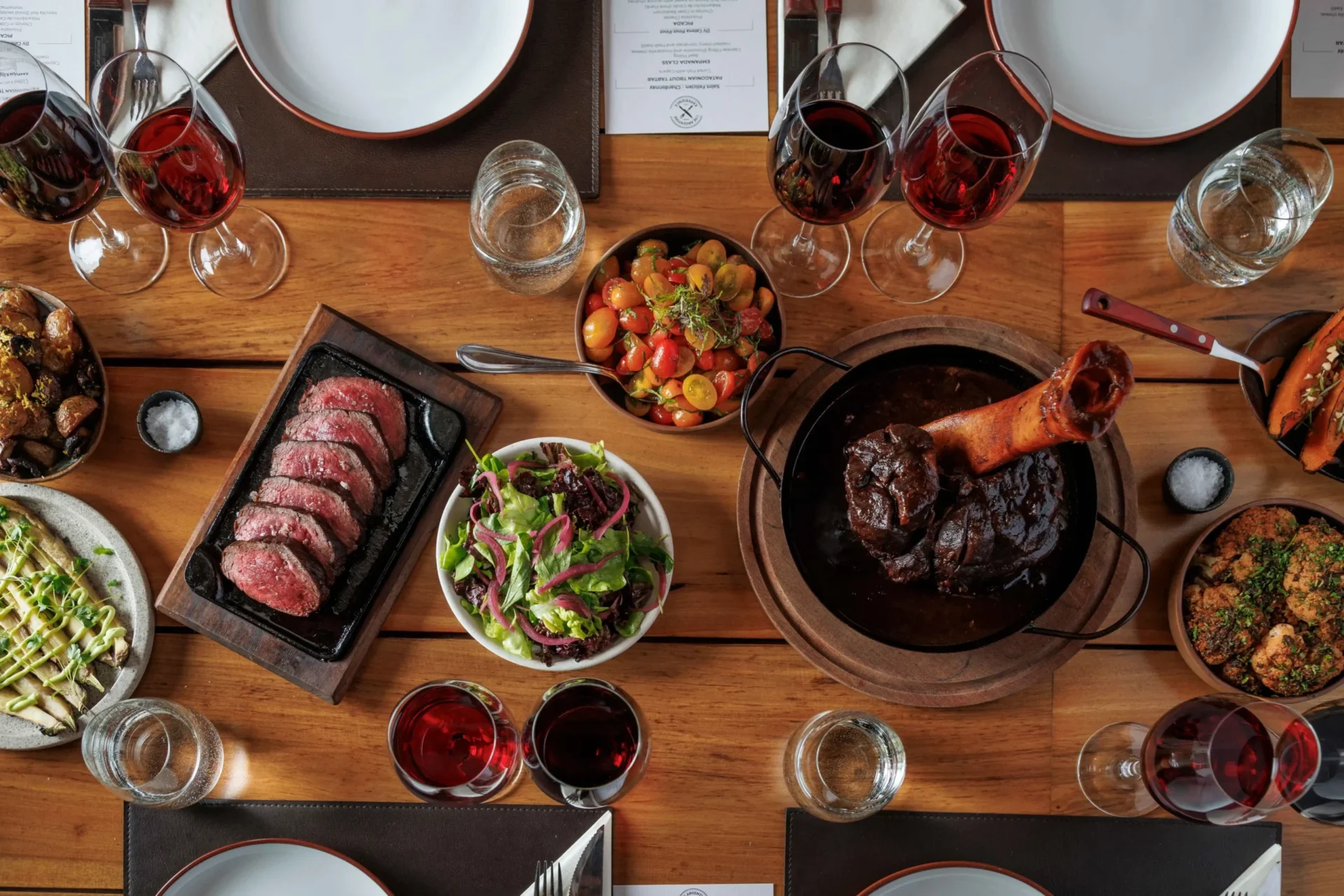
An authentic asado is never just about the main steak; the magic lies in the build-up. There are absolute non-negotiables that must hit the table first: the sizzling chorizo, the rich morcilla (blood sausage), and the crispy matambre (pork flank). These iconic starters pave the way for classic cuts like tira de asado (short ribs) and vacío (flank steak), all seasoned simply with salt to let the natural flavor of the beef shine.
While we don’t host a traditional outdoor grill at The Argentine Experience, as your culinary hosts, we make sure to bring that exact relaxed and friendly atmosphere to our shared table. We serve carefully crafted versions of the country’s best cuts. so you can experience the generous, multi-course rhythm of an asado while sharing laughs with fellow travelers.
With us, you get to taste the absolute best of all Argentine food in a single night. But if you are looking to dive deeper into the parrilla culture during your trip, we have put together a local guide on the 5 Best Steakhouses in Buenos Aires.
Empanadas: A Juicy Debate and a Hands-On experience
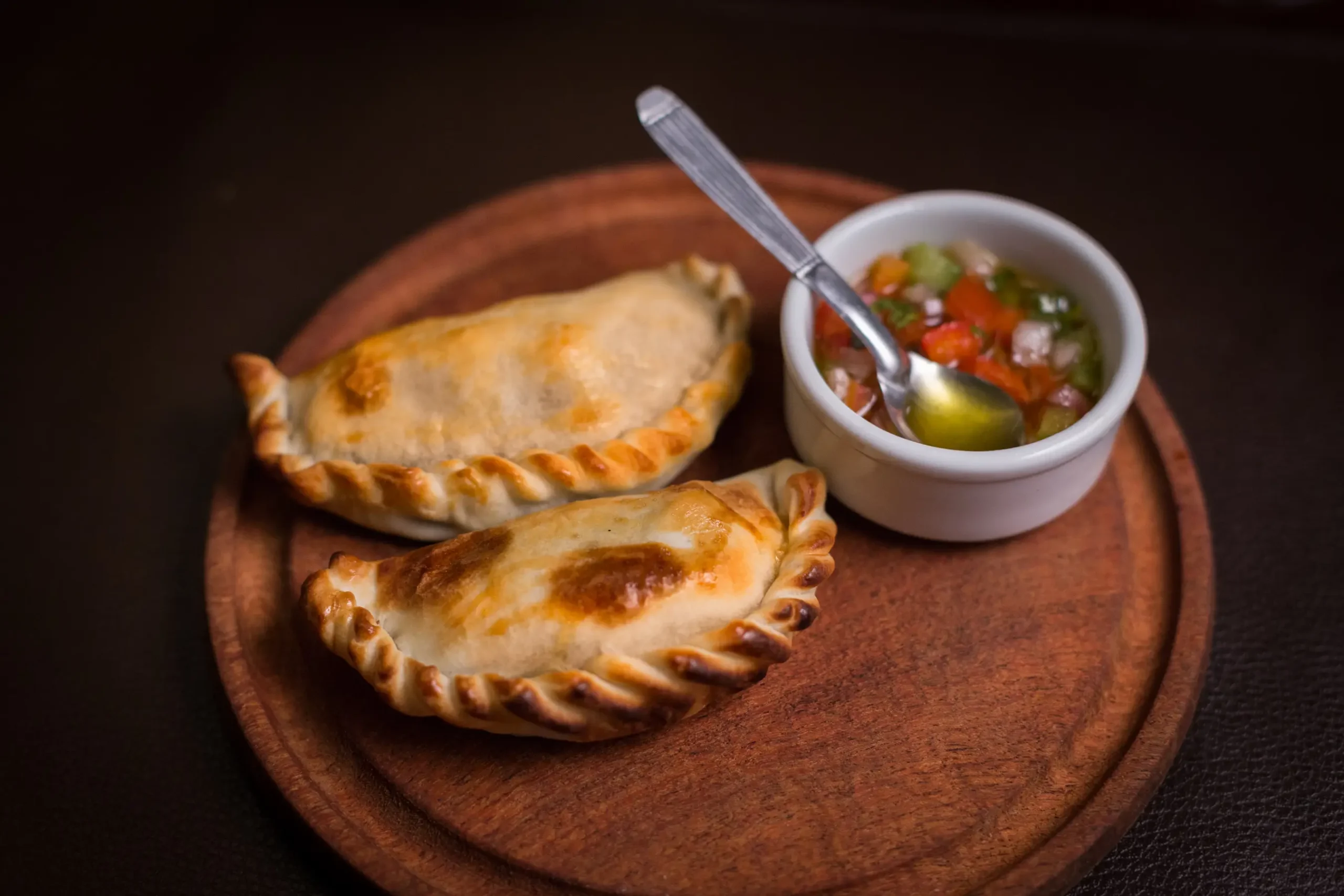
Every region has its version of empanadas, and us Argentines will argue endlessly about which one is best. Salteñas often have potatoes and a bit of spice, while Tucumanas are famously juicy (watch your shirt PLEASE). In Buenos Aires, most empanadas are baked (though fried are SO good), filled with seasoned beef, onion, olives, and egg. They’re handheld, hearty, and the ultimate local comfort food.
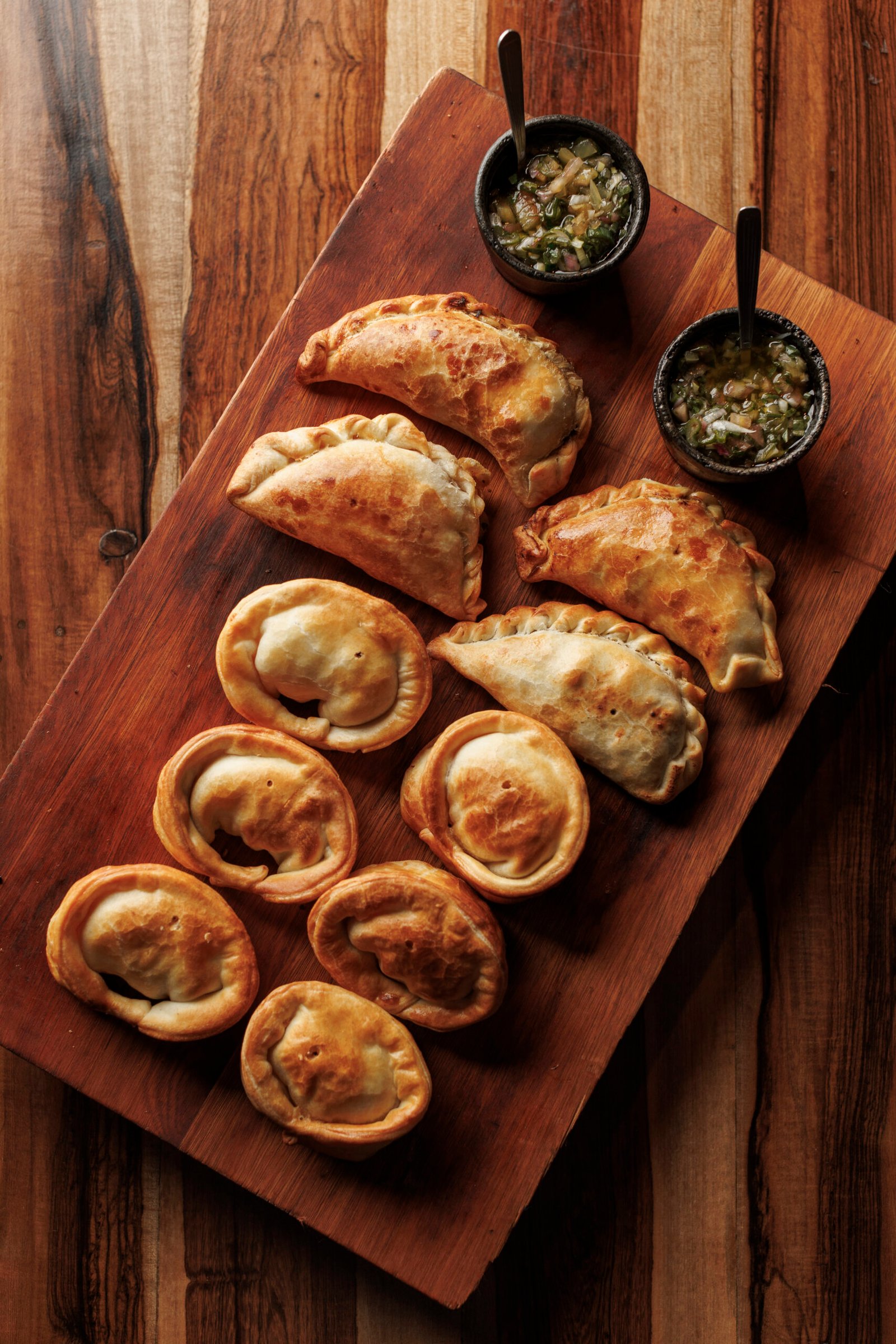
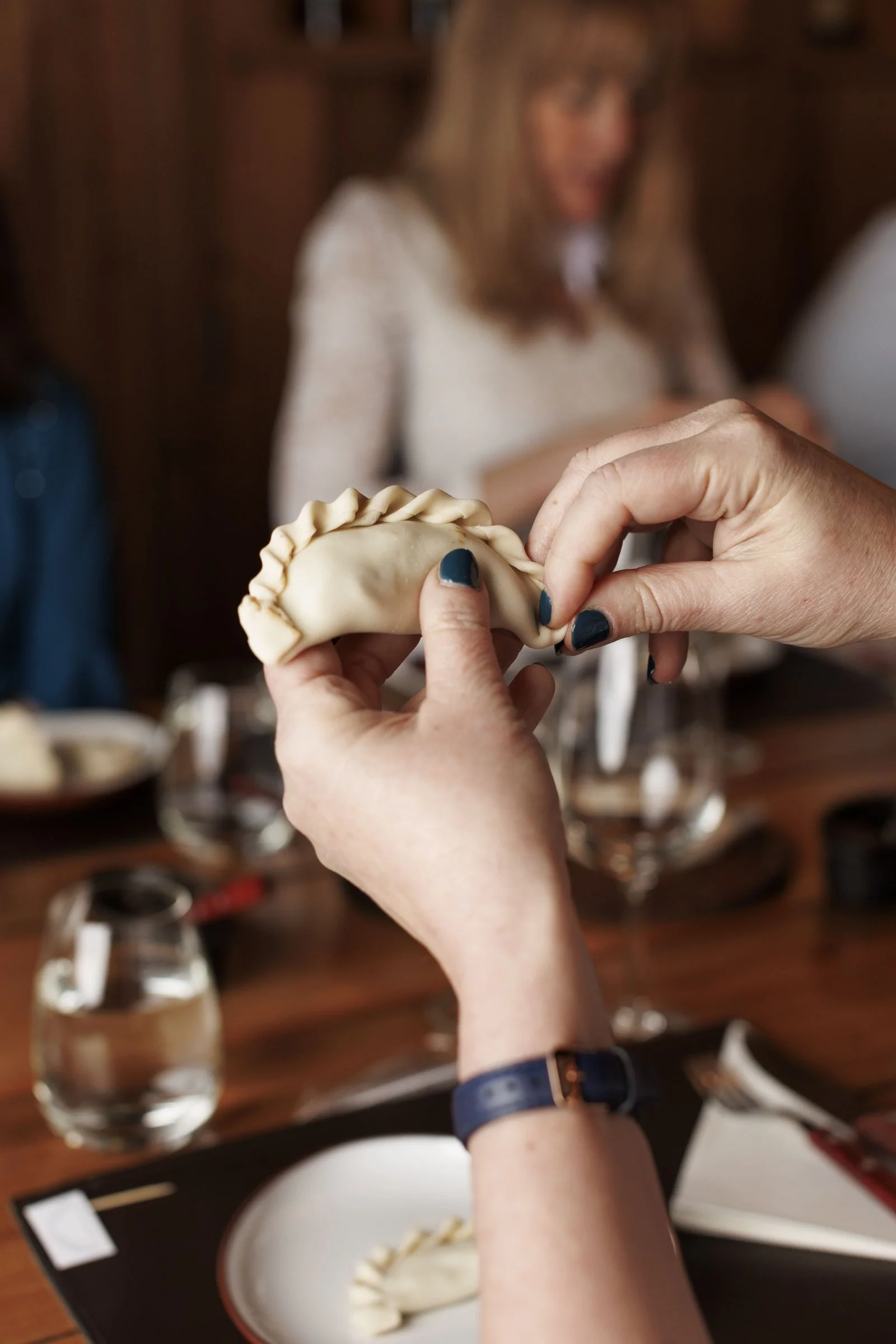
At The Argentine Experience table, we make sure you don’t just eat them; you get to master them. During our multi-course dinner, we serve our own carefully crafted recipe and teach you the art of the repulgue (the traditional fold). If you want to dive even deeper, our Cooking Class lets you prepare them completely from scratch. We prepare both meat and vegetarian fillings and practice different folding techniques together.
We’ll see how good your repulgue skills are… Honestly, I tried it myself and quickly realized it is definitely not my natural talent, haha! But don’t worry, whether you are a natural or a messy folder, our expert chefs are always right there by your side to guide you every step of the way.
Choripán: Street Food with a Kick
After a soccer match (or even before), nothing hits quite like a choripán. A crusty bread roll stuffed with a butterflied grilled chorizo, finished with a splash of chimichurri or salsa criolla.
Traditionally, it is served from smoky street carts outside stadiums or in local parks (some even say the chant from the stadium isn’t complete without the smoky cloud from the chorizos waiting outside). While nowadays you can find sit-down gourmet versions in trendy restaurants, grabbing one straight from a cart gives you the true mystique and the ideal cultural context to experience this argentine food.
The real secret to this street food, however, is in the sauces. A proper choripán is always finished with a generous splash of fresh salsa criolla or chimichurri.

At our dinner party, we absolutely love this iconic flavor, but a full street-style choripán is famously massive! Since we want to make sure you have plenty of room for all the other courses we have prepared for you, we skip the heavy bread. Instead, we serve you the absolute star of the show: premium grilled chorizo.
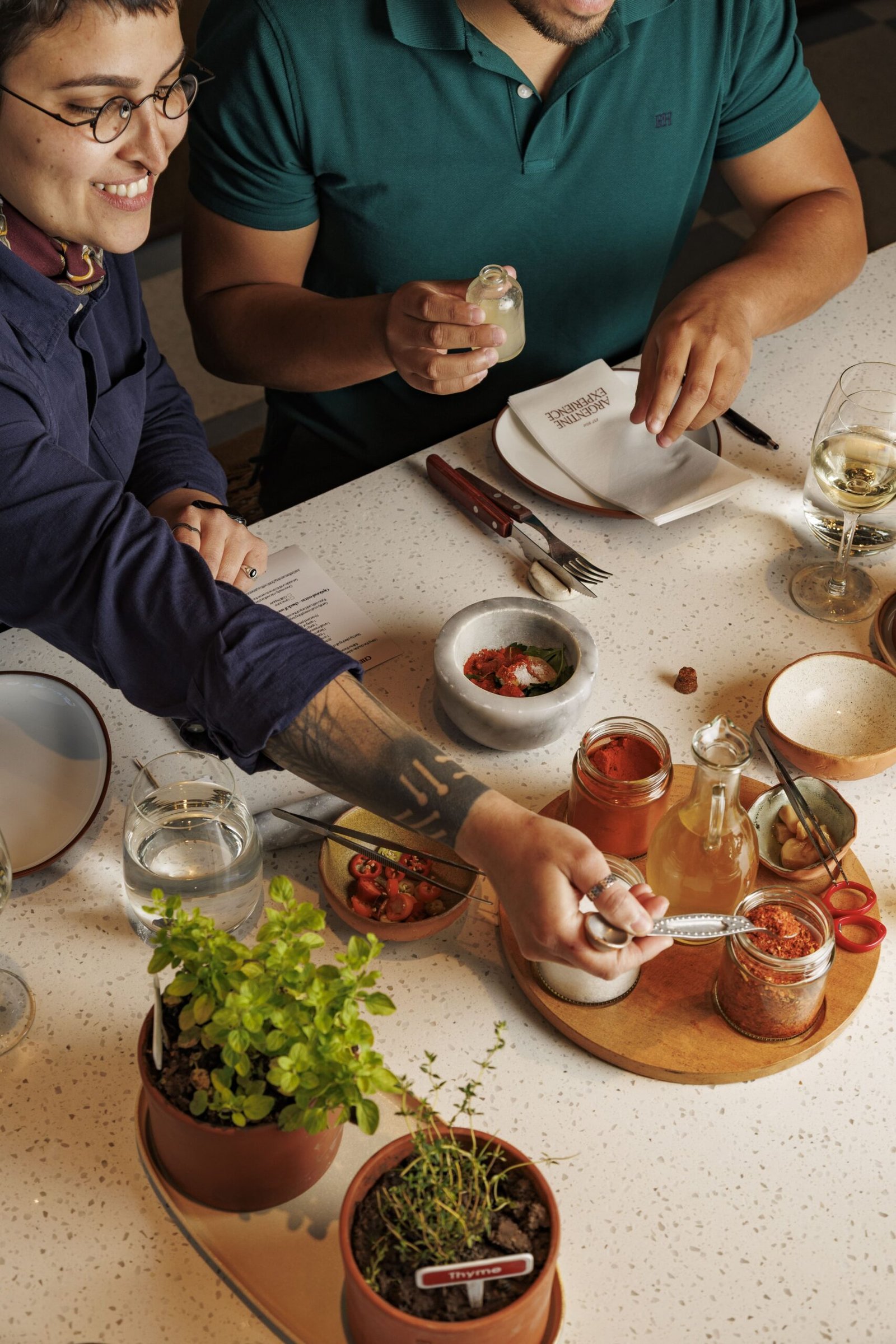
But here is the best part: we don’t just hand you the sauce. As part of our immersive experience, we invite you to roll up your sleeves and prepare your own chimichurri live at the table! We’ll guide you through the perfect balance of spices, garlic, and oil (and yes, you can check out our recipe here to recreate it at home). It’s the perfect way to get that legendary street food taste without ruining your appetite for the main event!
Milanesa: The Everyday Favorite
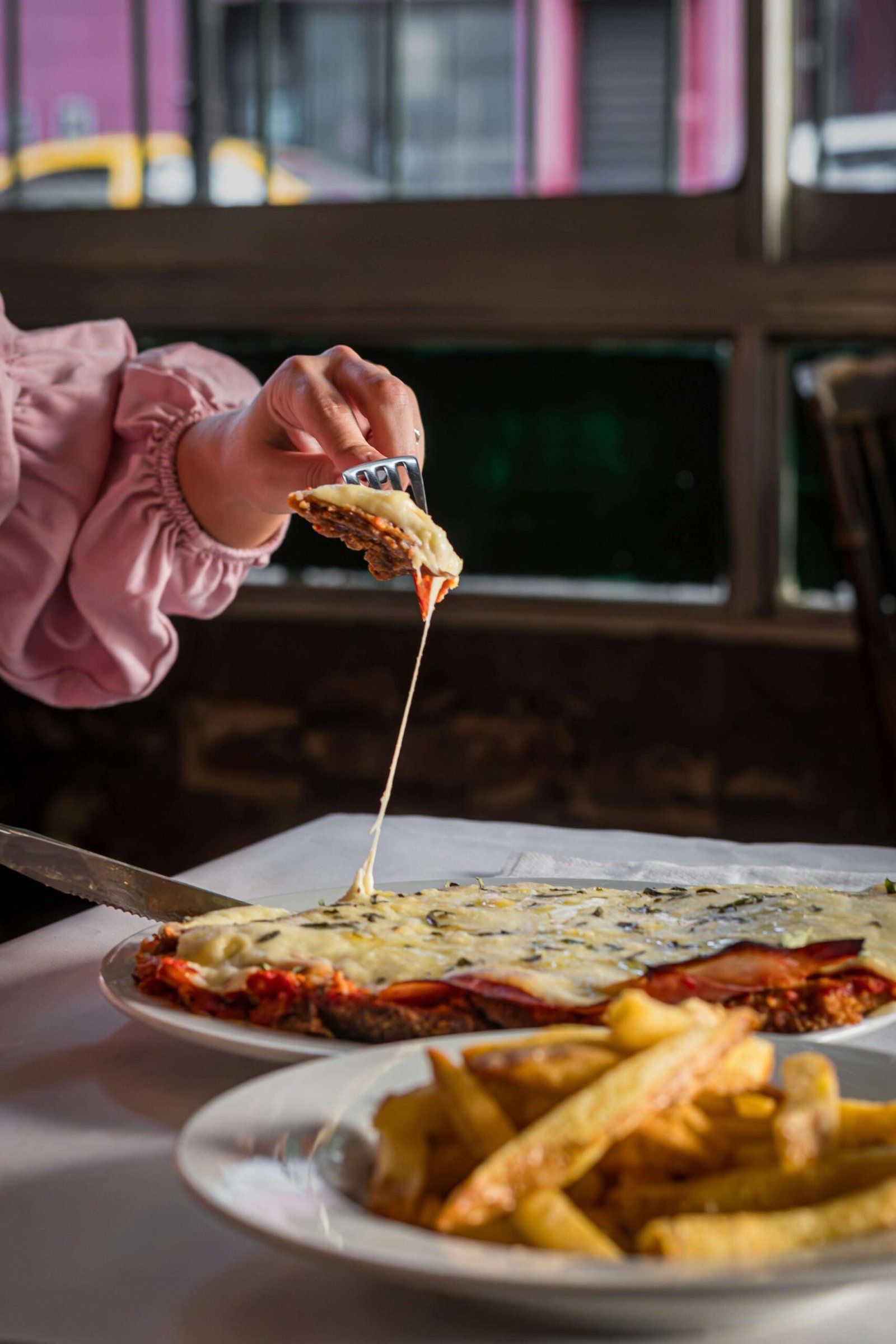
Breaded, fried, and served with fries or mashed potatoes, the milanesa is Argentina’s comfort food at its finest. Think schnitzel with a local twist. Kids grow up eating it at least once a week, and adults never really stop. Add ham, cheese, and tomato sauce on top and it becomes a milanesa napolitana. It may not look fancy, but if you ask me (or any local), it’s the dish we miss the most when abroad.
Provoleta: Cheese on the Grill
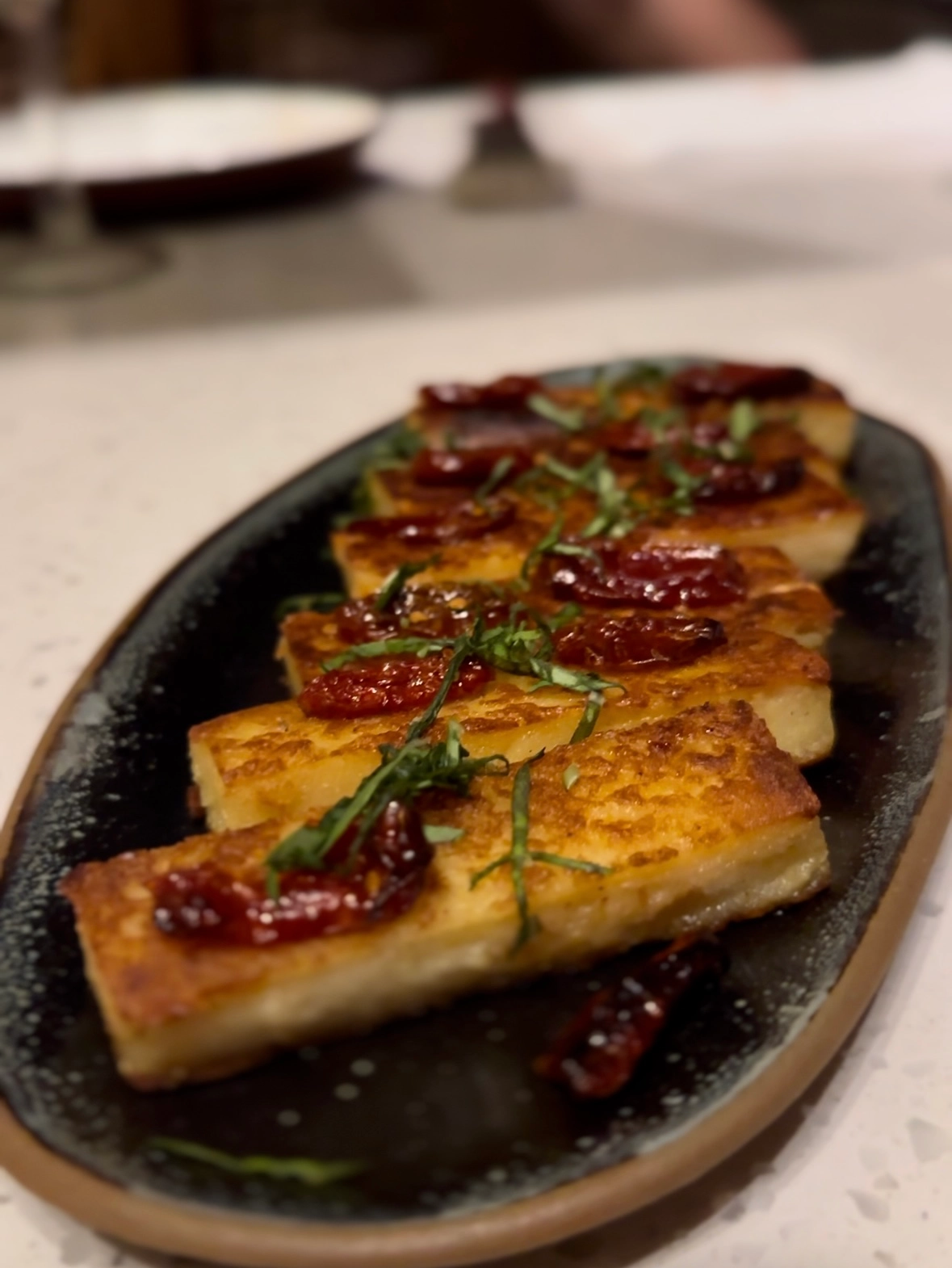
Part of the asado ritual, provoleta is provolone cheese grilled until it’s gooey inside with a slightly crisp edge. Often sprinkled with oregano and chili flakes, it’s shared as a starter before the meat arrives. The catch? It’s molten hot, so wait a few seconds or risk burning your tongue in your rush for that first stretchy bite.
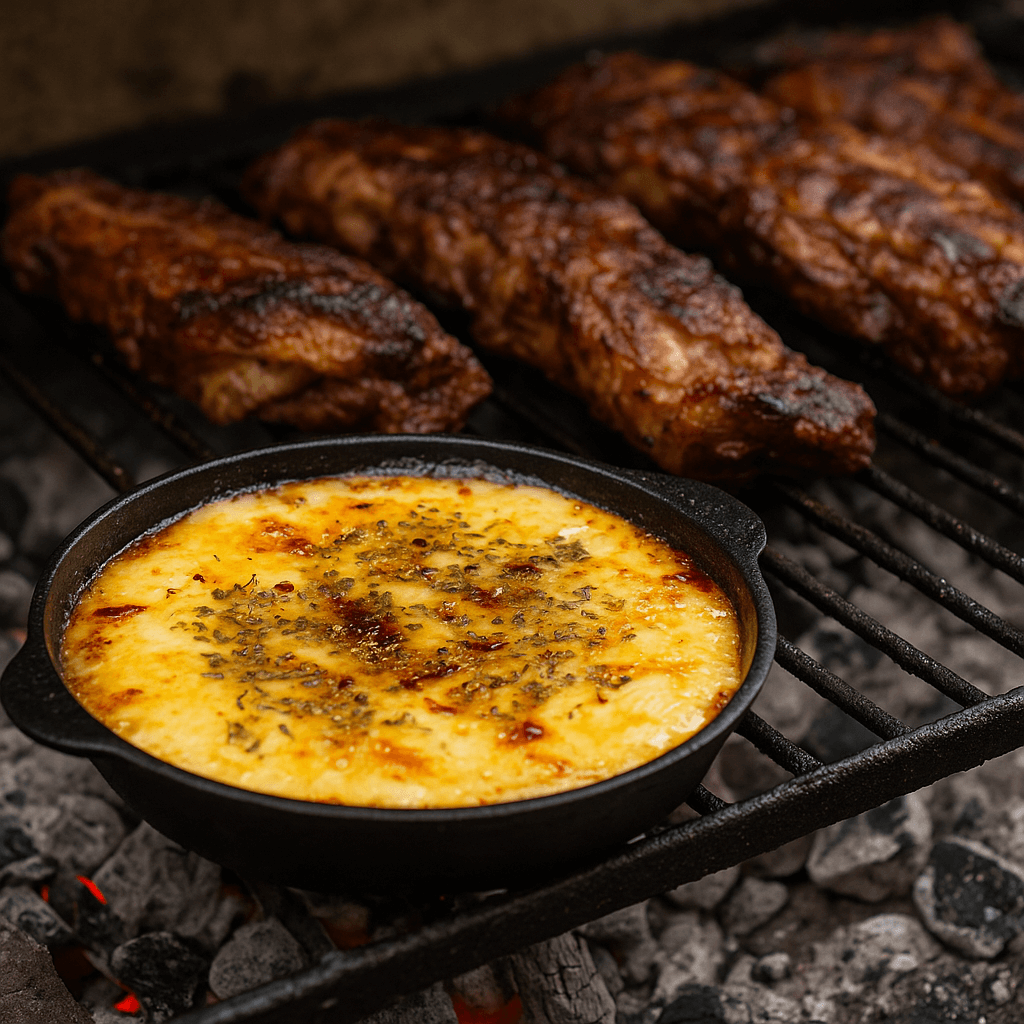
At our table, we love this classic, but decided to mix it with another porteño classic. It is our own unique twist: we combine the melting provoleta with the deeply rooted fainá (a savory, crispy chickpea flatbread).
By merging these two local favorites, we created a mouthwatering dish. Trust us, once you try this combination at our dinner party, you will understand why it is an absolute favorite among our guests!
Pizza and Fainá: A Buenos Aires Classic
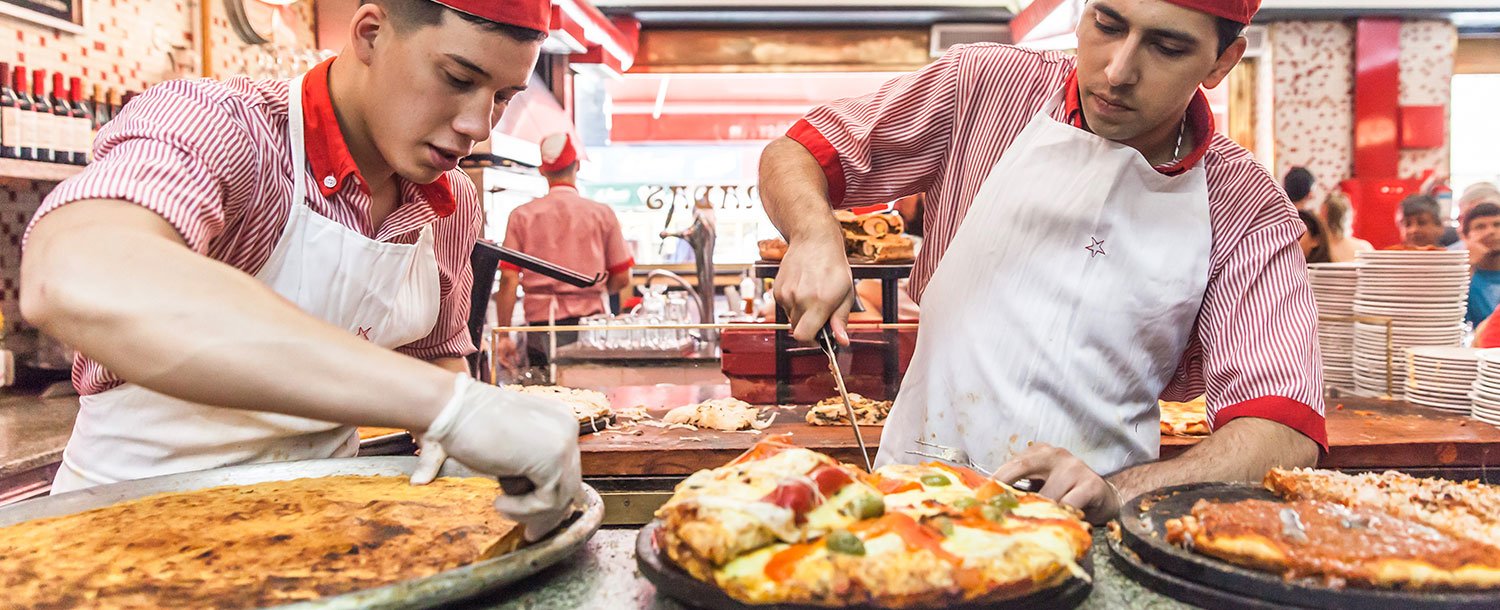
Thanks to Italian immigrants, pizza is everywhere in Buenos Aires, but don’t expect a thin Roman crust. The pizza in this city is thick, fluffy, and loaded with cheese. The classic move is to pair it with fainá, (the chickpea pancake you just read about) served on top of your slice. It’s heavy, filling, and very much a Buenos Aires thing. No one here cares about lightness, it’s all about abundance.
Another highlights of the Street food scene.
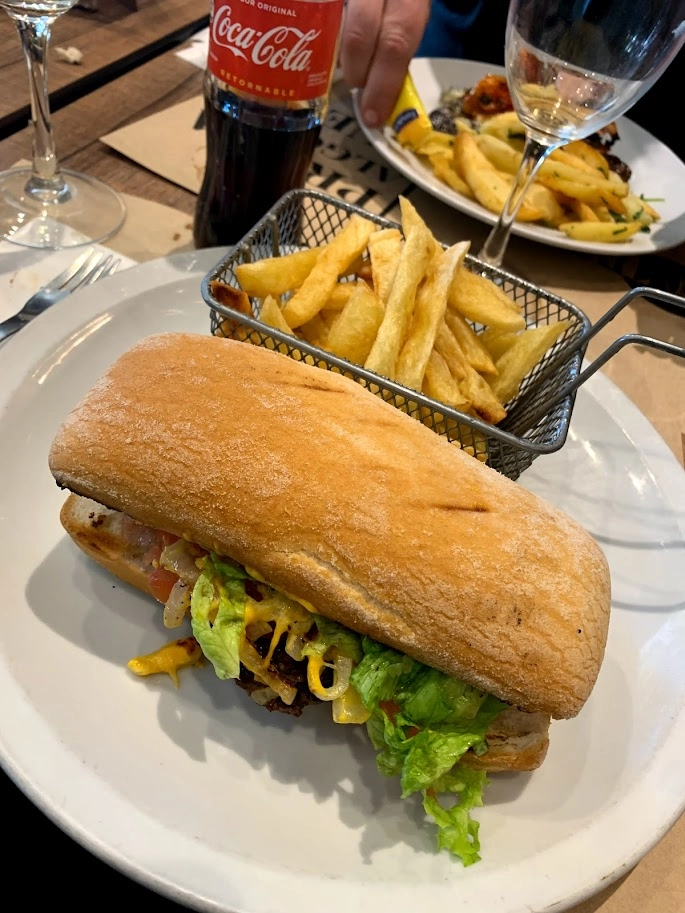
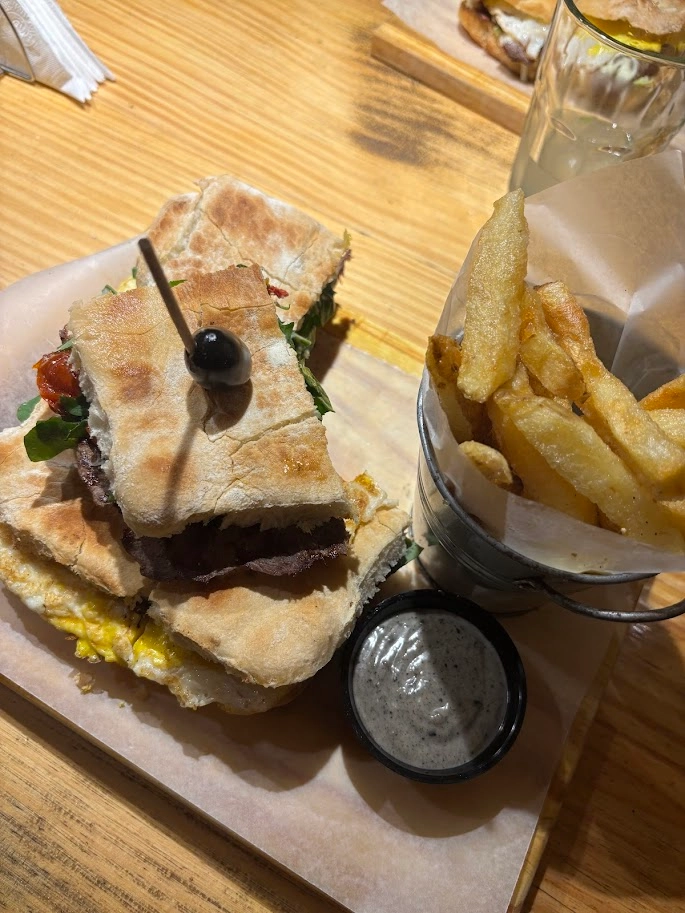
While choripán and empanadas are the main “dishes” of Argentine street food, there are other massive sandwiches that earn a spot on the “Must Try” list for any serious food lover.
The Lomito sandwich
It’s a stack of thinly sliced tenderloin, ham, cheese, fried egg, tomato and lettuce. While you can find it in many places, locals know the best versions come from the province of Córdoba.
The Bondiola Sandwich
The pork shoulder cousin of the steak sandwich. Marinated and grilled until tender, it is the classic choice to eat standing up at the Costanera (the riverside promenade).
At our dinner, we stick to the knife-and-fork classics, but we highly recommend hunting down these two giants for a casual lunch during your stay.
The Sweet Side of Argentine Food
Dulce de Leche
No talk about Argentine food is complete without dulce de leche. This caramel-like spread, made from slowly cooked milk and sugar, is the soul of many local desserts. You’ll find it on breakfast toast, in gelato flavors, in birthday cakes, and hidden in almost every sweet treat. Some say it was discovered by accident in the 19th century, but today it’s intentional indulgence and honestly, one of the most beloved flavors in the country.
Alfajores
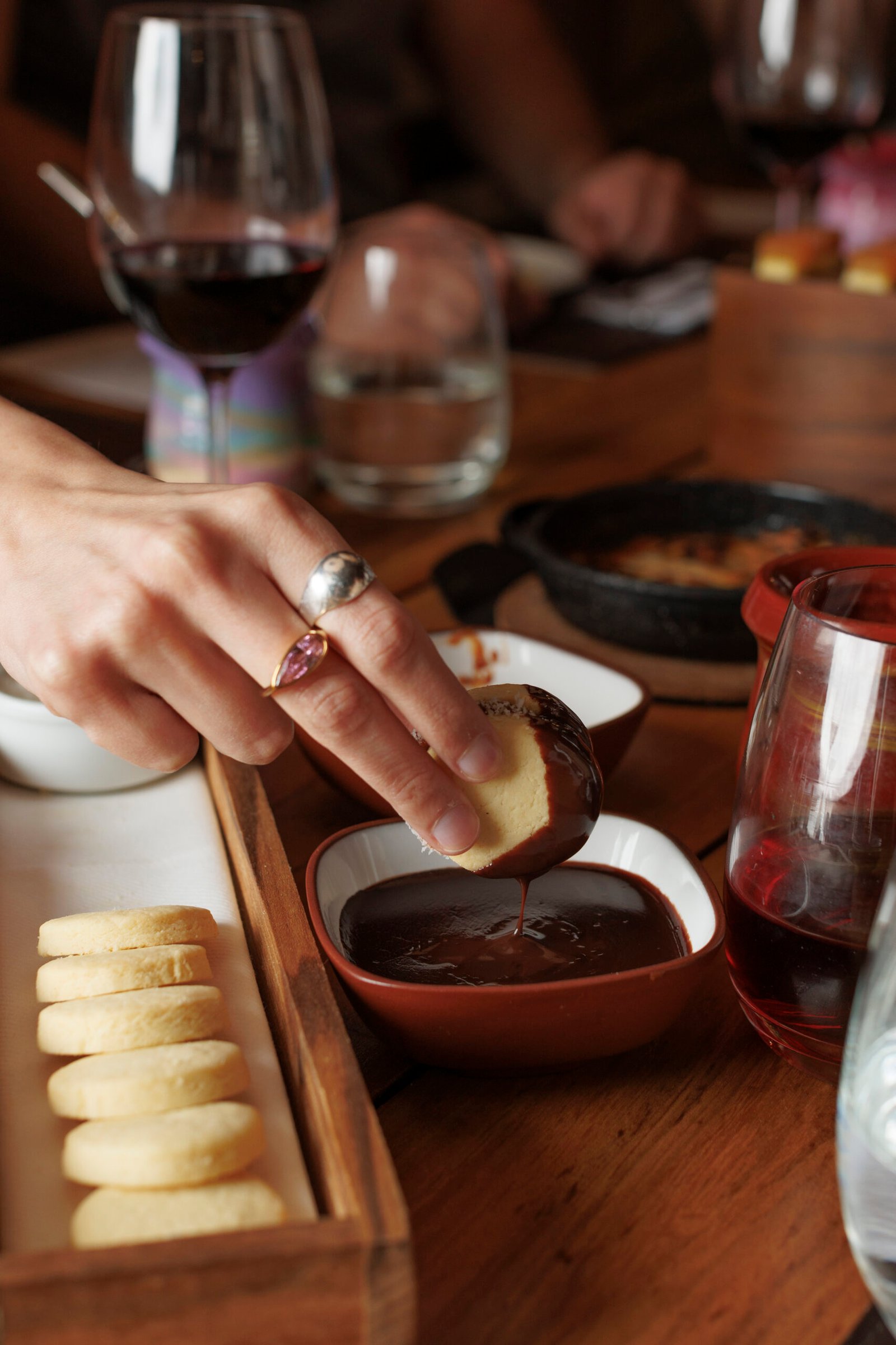
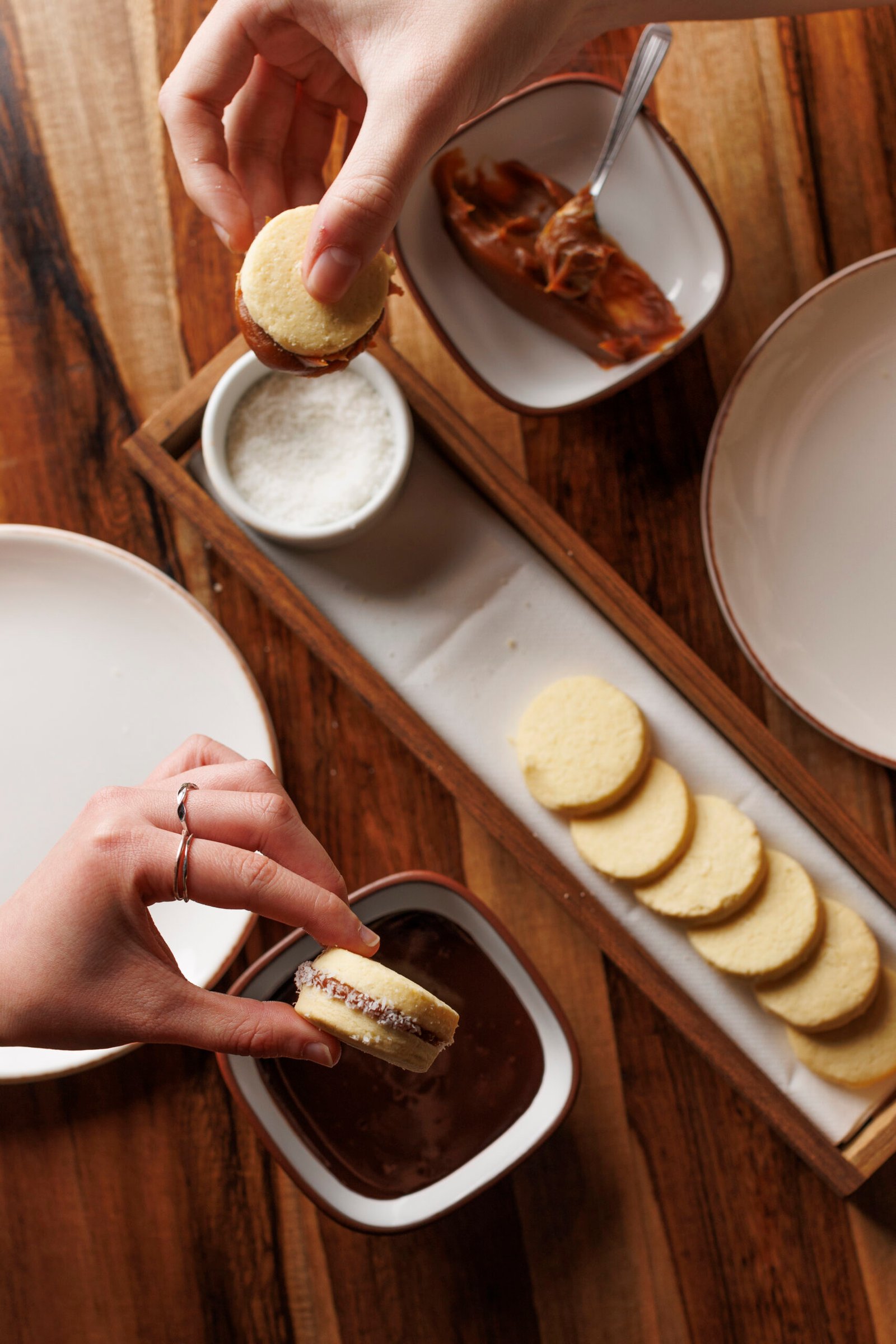
If you ask locals what snack defines traditional Argentine food, most will say the alfajor. Two soft cookies sandwiching a generous layer of dulce de leche, usually covered in chocolate (eather white or dark) or rolled with coconut. They’re sold everywhere, from kiosks on the corner to artisanal bakeries, and every Argentine has a favorite brand.
It is a simple pleasure, but one that captures the absolute heart of Argentine cuisine. That is exactly why we chose it as the grand finale to a dinner that truly has it all.
At our table, we invite you to build your own classic alfajores de maicena (delicate cornstarch cookies that melt in your mouth). And because we love to indulge, we don’t just stick to the traditional coconut edge… We take it a step further and let you bathe your creation in warm, melted chocolate. It is interactive, a little bit messy, and undeniably decadent. The absolute sweetest way to end your night in Buenos Aires!
Chocotorta
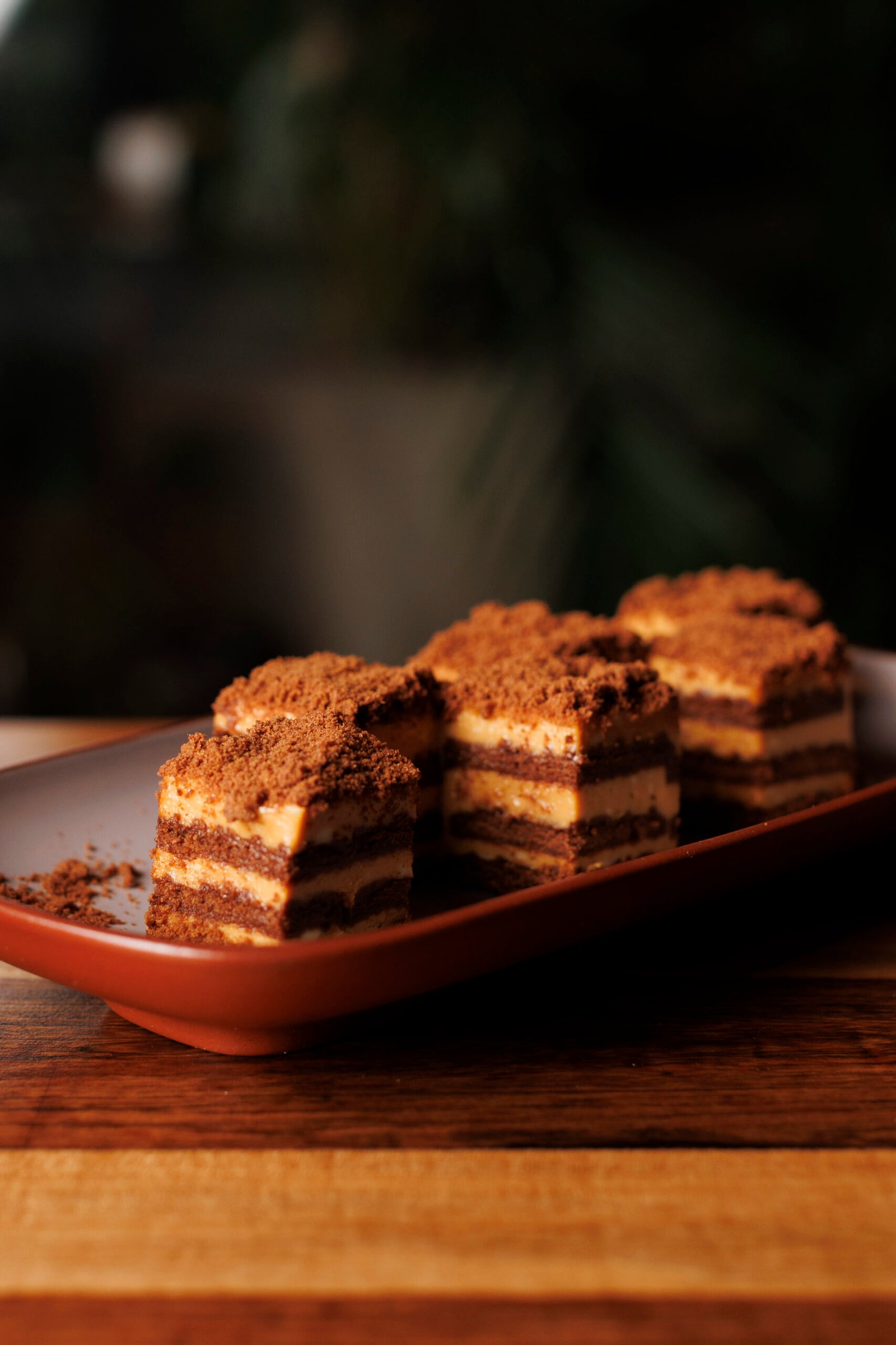
The chocotorta (personally, my favorite) is a no-bake cake layered with chocolate cookies, dulce de leche, and cream cheese. Originally born in home kitchens, it is a fiercely local tradition—slightly messy, full of nostalgia, and proof that a great Argentine dish doesn’t need fancy techniques, just creativity and the right mix of flavors.
Because it is so deeply representative of an authentic Argentine childhood and our everyday culture, we knew we had to share it with our guests. And we aren’t the only ones who think it is spectacular: in 2020, it was officially voted the “Best Dessert in the World.” We serve our own special version of it at our dinner party, and trust me, once you dig into those rich, comforting layers at our table, you will understand exactly why it took the global crown.
Flan: The Bodegón Classic
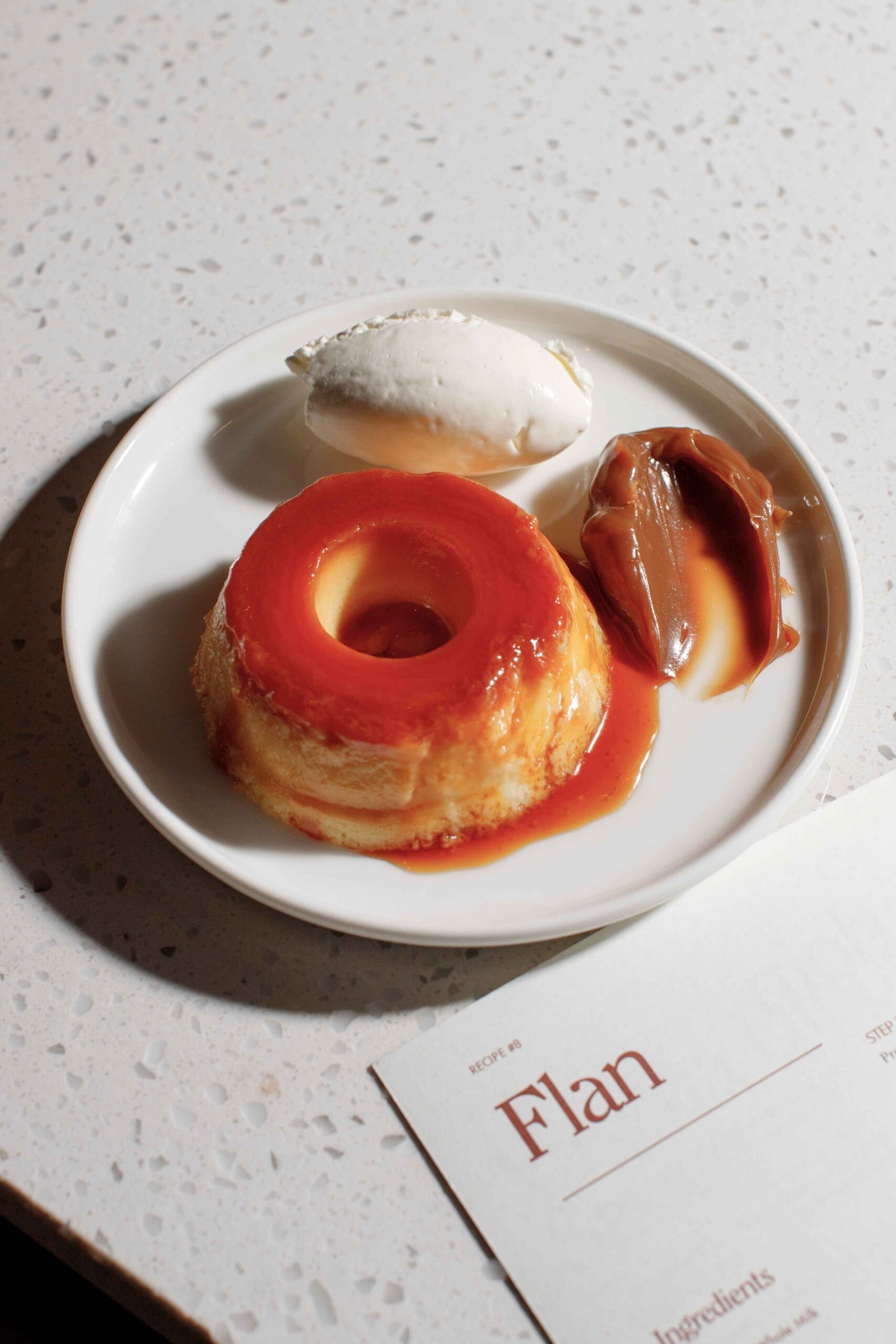
Every Sunday family lunch in Argentina, and almost every meal at a classic local bodegón (traditional neighborhood restaurant), seems to end the exact same way: with flan. This smooth caramel custard, ideally topped with a generous dollop of both whipped cream and dulce de leche (we proudly call it flan mixto), is a dessert that crosses generations.
Because no true Argentine feast is complete without it, we make sure to serve a perfectly silky version during our multi-course dinner. But if you really want to understand the magic behind this timeless staple, you have to join our daytime Cooking Class! We will step into the kitchen together and teach you exactly how to bake a classic, homemade flan from scratch. We’ll show you, just like with the chocotorta, that you don’t need elaborate techniques to create something deeply satisfying. It is about good ingredients, a little patience, and the perfect spoonful of dulce de leche to top it all off.
Craving something sweet?f these classics made your mouth water and you want to discover what other sweet treasures await in the city, we invite you to explore our Guide to Argentine Desserts.
Drinks and Rituals
When people think about what to eat in Buenos Aires, they usually picture smoky asados, cheesy pizzas, or empanadas. But what you drink matters just as much as what’s on your plate. Argentina’s food culture is tied to its drinks, from the gourd of mate passed around to the glass of Malbec that feels made for your dish. And trust me, if you ever try those classic alfajores de maicena, tasty as they are, you’ll need a drink right next to you, because getting them down without one is a whole mission.
Mate
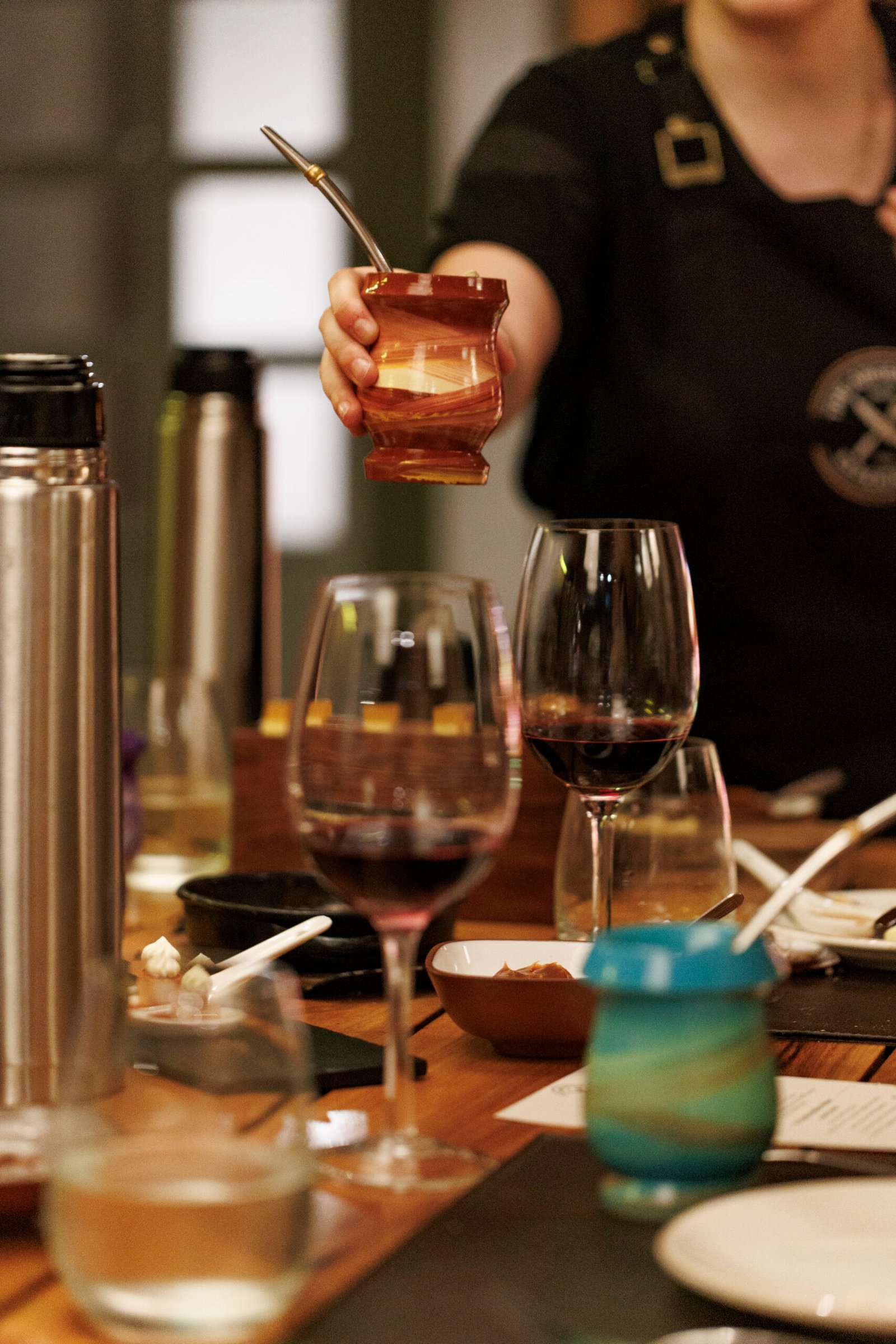
Technically a drink, but really a ritual. Mate is made from the dried leaves of the yerba mate plant, brewed in a hollow gourd and sipped through a metal straw called a bombilla. The flavor is earthy and slightly bitter, but the point isn’t just the taste; it’s the act of sharing. Passing the mate around is part of the rhythm of daily life: friends, families, even coworkers take turns. We even realized how much we missed it during the pandemic, when sharing wasn’t possible.
Just remember the golden rules: don’t stir the straw, and don’t keep it forever, otherwise someone will jokingly ask if you’re giving a speech into a microphone. And one more tip: when you say “gracias” to the person serving, it doesn’t mean “thanks for this one,” it means you’re done drinking.
Argentine Wine
If there’s a perfect partner for Argentine cuisine, it’s wine, and especially Malbec. Originally from France, Malbec found its best version in Mendoza’s sunny vineyards, becoming bold, fruity, and smooth enough to stand up to a steak. But Argentina also shines with Cabernet, Torrontés (the only grape variety native to Argentina), and even exciting natural wines. For many locals, a glass of Malbec with an asado isn’t just a pairing, it’s the definition of what dinner should feel like.
Fernet and Coca
Love it or hate it, this combo is part of the DNA of local Argentine food culture. Fernet, a bitter Italian herbal liqueur, took deep root in Argentina, and when mixed with Coca-Cola it became the go-to drink in Córdoba and beyond. It’s strong, a little strange at first sip, but unmistakably Argentine. And if you’re out at night and see a group of friends sharing a giant plastic bottle of Fernet and Coke, don’t be surprised, that’s as classic here as ordering another round of beers elsewhere.
We Argentines don’t just share food or drinks; we share a unique way of experiencing it. Our recipes are the beautiful result of immigrant stories, deep roots, and unwritten rules. If you want to go beyond the ingredients and understand the true codes of our food culture (the how, the when, and the why we eat what we eat) and also where to get the best bites in the city, dive into our full article on Food in Buenos Aires.
The Sidekicks
Chimichurri
If asado is the star of Argentine food, chimichurri is the sidekick that often gets just as much love. It’s a simple mix: parsley, garlic, vinegar, olive oil, and a pinch of red pepper flakes. Still, every family has its own version and, of course, everyone swears theirs is the best. A spoonful over steak or a choripán is enough to make you forget you ever planned to eat “just a little.”
Salsa Criolla
Right next to chimichurri, you’ll always find salsa criolla. Tomatoes, onions, and peppers marinated until they’re tangy and bright. It’s the fresher, crunchier cousin, the one you pile on top of everything without thinking twice. Together, these two sauces prove that traditional Argentine food isn’t just about meat but about the little extras that make the whole table come alive.
Where Can You Taste It All in One Night?
After reading about smoky asados, juicy empanadas, and sweet desserts filled with dulce de leche, you might be wondering how to try all this traditional Argentine food without running from one corner of the city to another. The truth is, you’d probably need weeks, and maybe a couple of extra stomachs, to cover it all.
That’s where The Argentine Experience comes in. Their multi-course dinner takes you through Argentina’s essential flavors in one evening: rolling your own empanadas, learning the secrets of chimichurri, enjoying perfectly cooked steak with Malbec, sipping mate, and finishing with something sweet. It’s food, culture, and storytelling woven together, all in one place.
And if you’re more of a hands-on traveler, you can also join their cooking classes. From kneading dough for chipá to mastering flan with dulce de leche, the classes are designed to be fun, interactive, and approachable, the kind of experience you’ll take home and share around your own table.
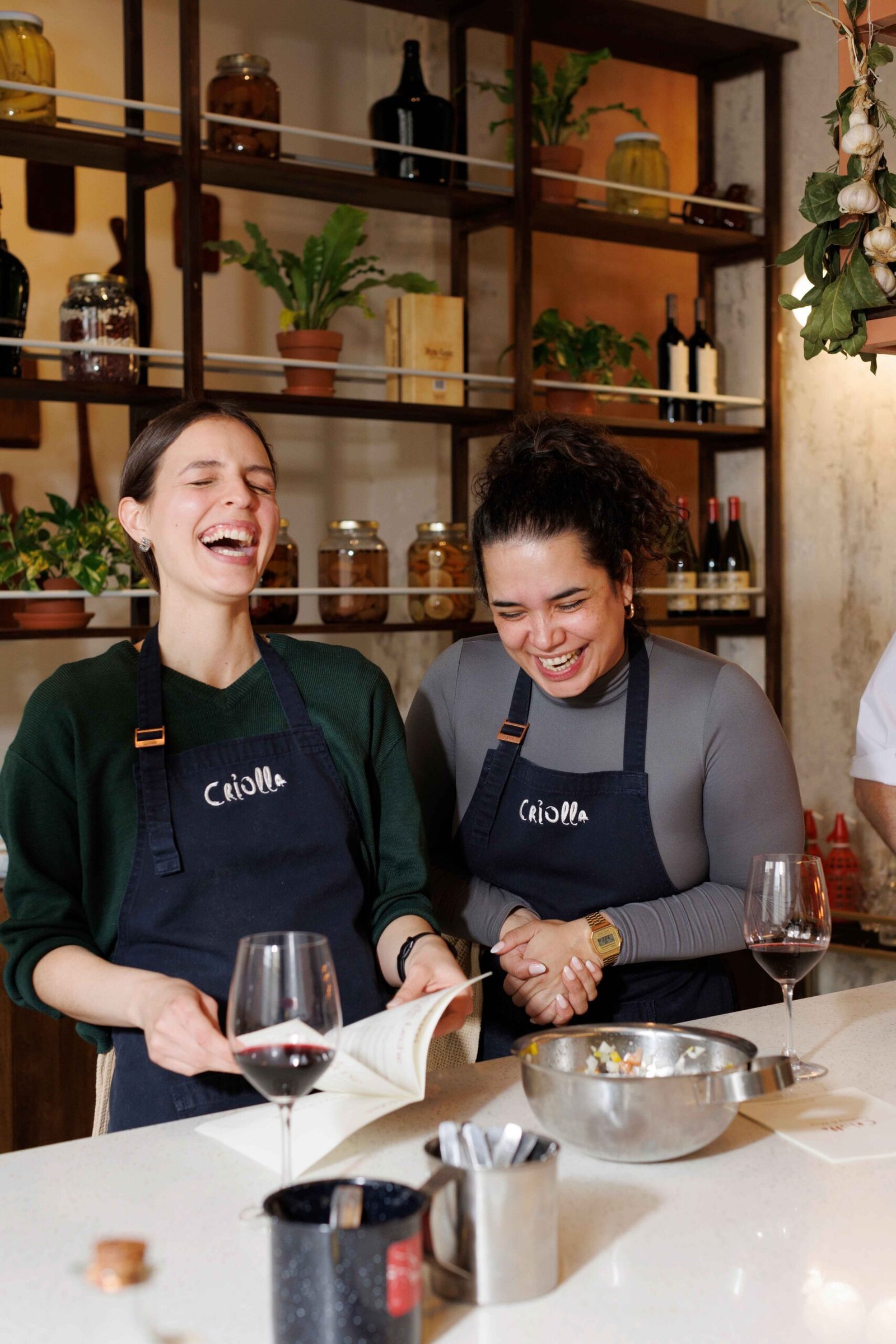
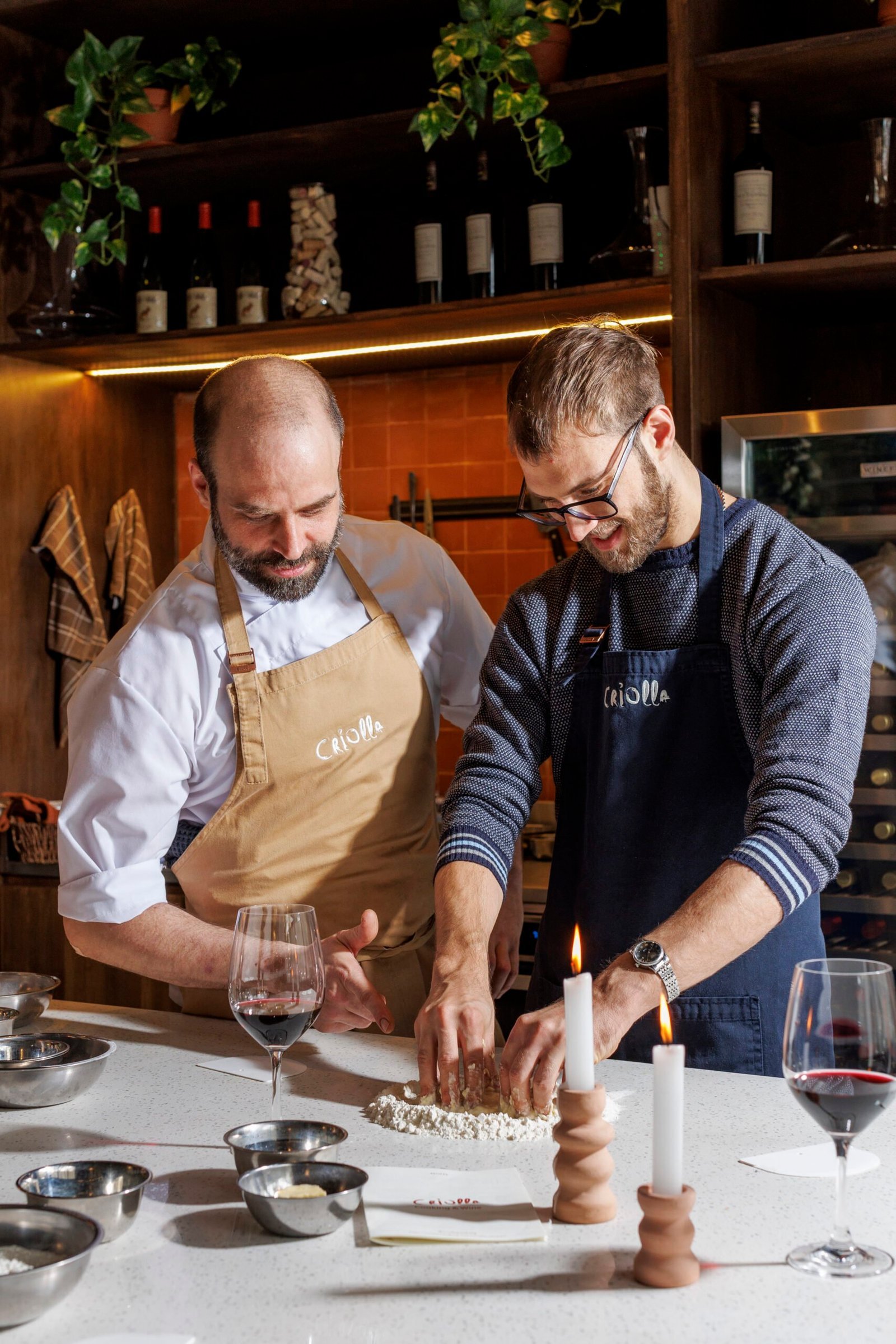
The atmosphere at The argentine experience feels more like a dinner party than a restaurant: laughter, stories, and flavors flowing course by course. If you want to understand both local food traditions and the best of Argentine cuisine, this is the most complete and fun way to do it all at once.
Wrapping It All Up
At the end of the day, Argentine food is more than a list of recipes: it’s a way of sharing life. An asado that brings everyone to the table, empanadas that spark friendly debates over which province makes them best, a choripán devoured after the stadium, a spoonful of dulce de leche that reminds you of childhood…
If you’re planning your trip and still wondering what to eat in Buenos Aires, we’ve put together a full guide to Argentine food in Buenos Aires to help you dive even deeper into the city’s flavors.
And if you’d rather taste it all, there’s no better way than booking an evening at The Argentine Experience. It’s not just dinner, it’s a celebration of everything Argentina loves about food.