
Welcome to The Argentine experience Cooking Class in Buenos Aires! We are an interactive dining concept designed to immerse you in our local culture, combining the joy of hands-on cooking, sharing a lively table with fellow travelers, and, of course, excellent local wines. Today, we’re taking you on a culinary journey to explore the vibrant and tangy world of the Authentic Argentine chimichurri. This iconic sauce is a staple in Argentine cuisine, known for its bold flavors and versatility. Let’s dive into the history of chimichurri, learn about its traditional ingredients, and master the art of preparing this mouthwatering delight.
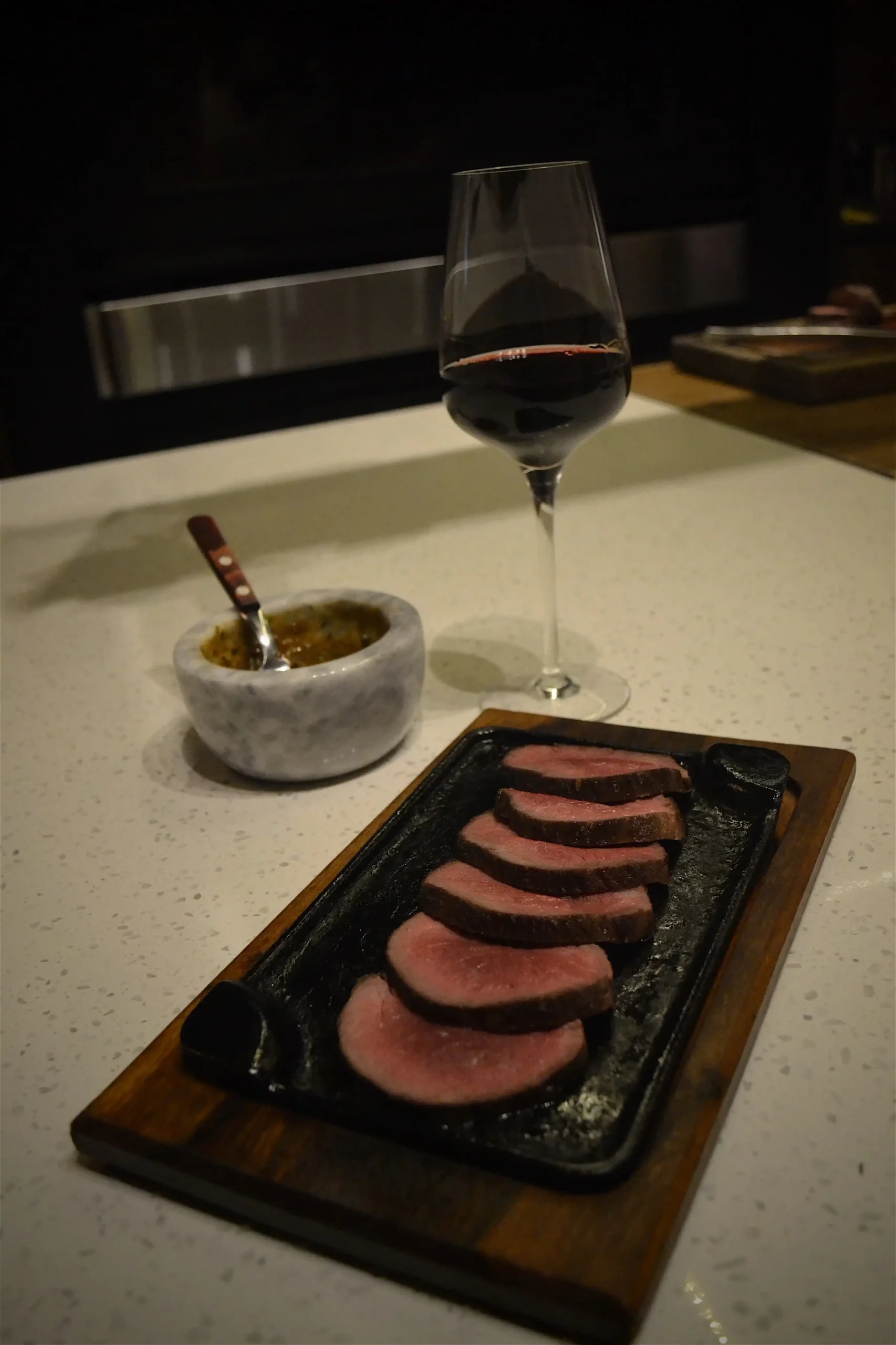
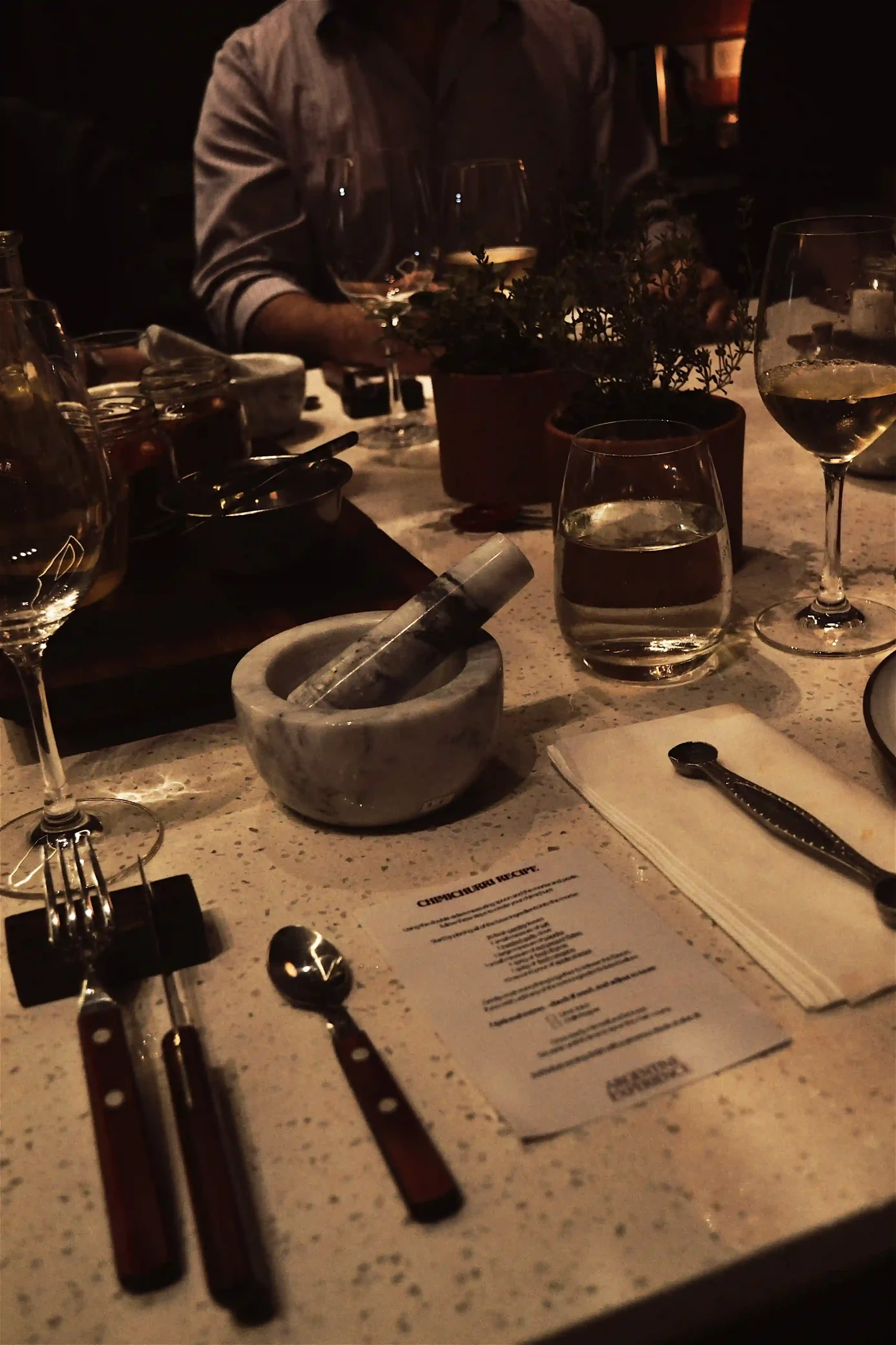
A Brief History of Chimichurri:
Chimichurri is a typical sauce that has developed and evolved over time, since the 19th century. Over time, the recipe evolved to reflect the diverse culinary influences of our region, blending native South American flavors with European techniques, in other words, a creole specialty. Today, while it pairs beautifully with certain cuts of grilled meat, chimichurri is the absolute, non-negotiable topping of the classic Argentine choripán, and is loved by locals and visitors alike for its zesty and herbaceous notes.
That is exactly why we chose to feature this argentine sauce in our dinner experience and teach our guests how to prepare it, mastering the perfect balance of premium dried spices and fresh herbs to achieve those unforgettable notes.
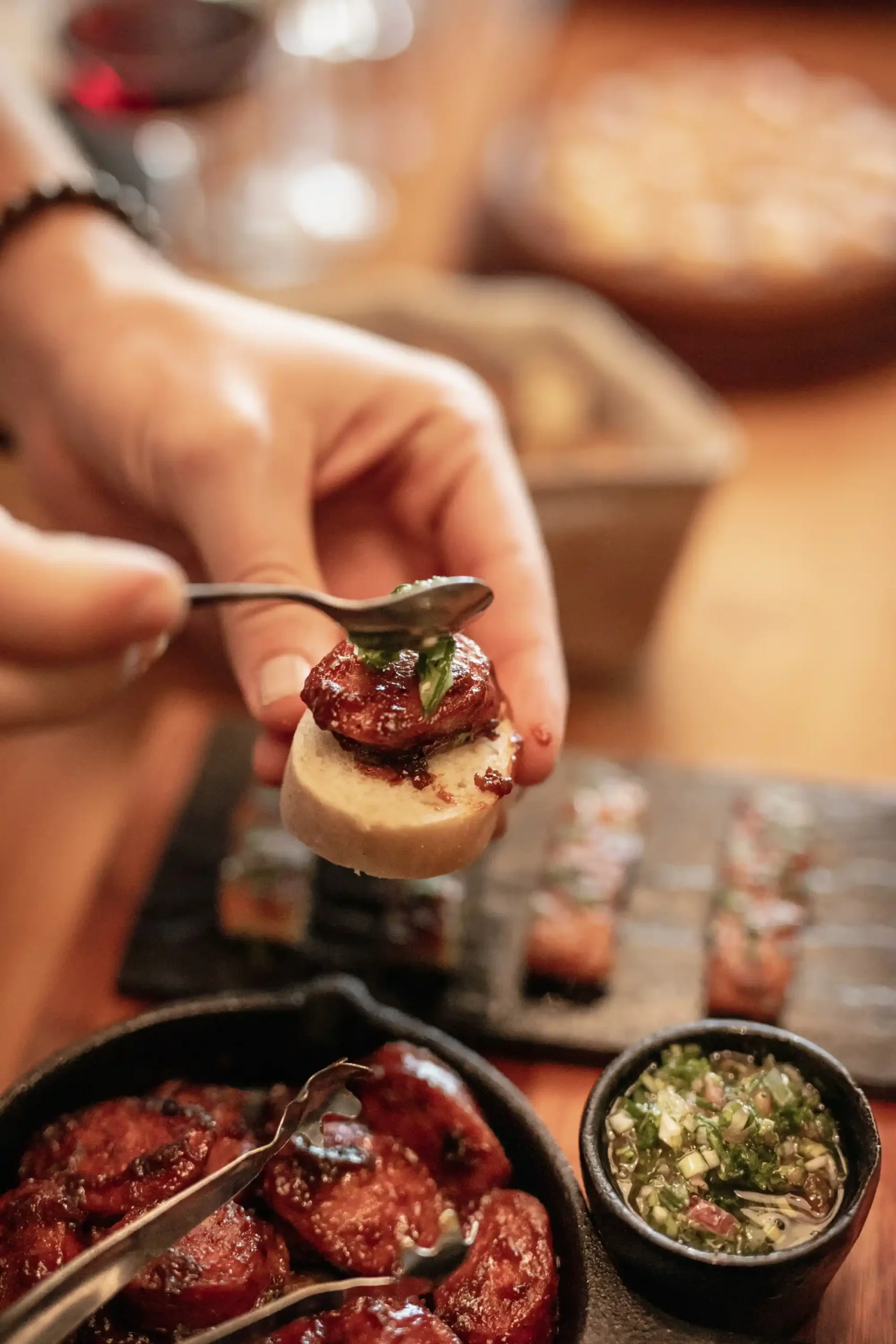
Ingredients:
To create an authentic Argentine chimichurri, you’ll need the following ingredients:
- 1 cup fresh flat-leaf parsley, finely chopped
- 4 cloves garlic, minced
- 1/2 cup fresh oregano leaves, finely chopped
- 1 tablespoon red pepper flakes (adjust to taste)
- 1 teaspoon coarse sea salt
- 1/2 teaspoon freshly ground black pepper
- 3/4 cup extra-virgin olive oil
- 1/4 cup red wine vinegar
- 2 tablespoons lemon juice (optional, for extra tanginess)
Chimichurri Step-by-Step Guide
- Prepare the Herbs: Wash the fresh parsley and oregano thoroughly, then pat them dry with a paper towel. Finely chop the parsley and oregano leaves and set them aside.
- Mix the Dry Ingredients: In a medium-sized bowl, combine the minced garlic, red pepper flakes, coarse sea salt, and freshly ground black pepper. This mixture forms the aromatic and spicy base of the chimichurri.
- Incorporate Olive Oil and Vinegar: Slowly pour the extra-virgin olive oil into the bowl while whisking gently to ensure all the dry ingredients blend well. Follow this by adding the red wine vinegar, which adds a delightful tang to the sauce. If you prefer a more tangy chimichurri, mix in the optional lemon juice at this stage.
- Add the Fresh Herbs: Stir in the finely chopped parsley and oregano.
- Rest and Serve: Cover the bowl with plastic wrap or transfer the chimichurri into a tightly sealed container. Allow the sauce to rest in the refrigerator for at least 2 hours or ideally overnight. This resting period allows the flavors to meld together, resulting in an exquisite taste.
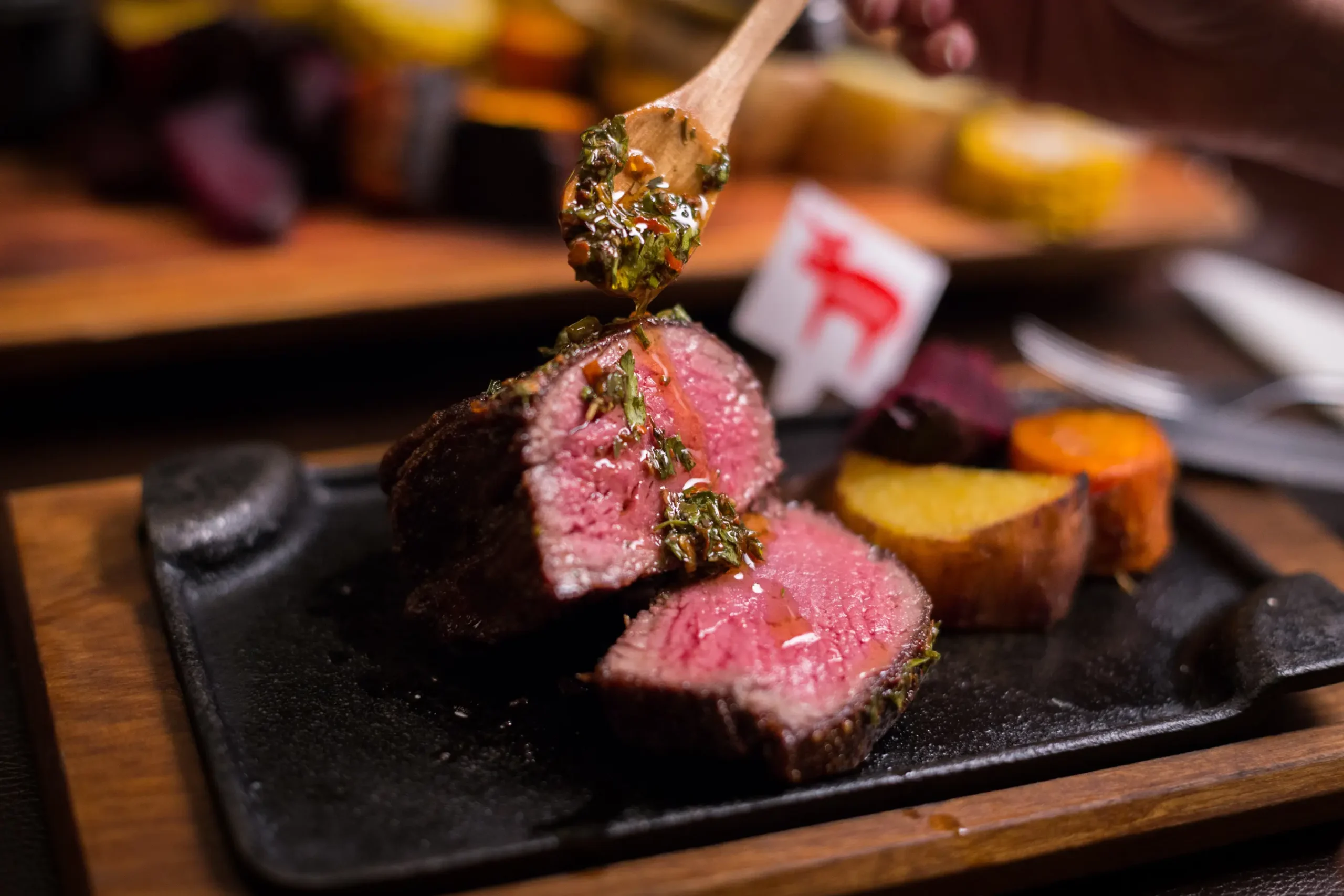
- Enjoy with Your Favorite Dishes: Once the chimichurri has matured, it is ready to be served. This versatile sauce pairs excellently with grilled meats, such as beef, chicken, and lamb. Drizzle it over your hot off-the-grill steaks or use it as a marinade to tenderize and flavor the meats before grilling.
With this authentic Argentine chimichurri recipe, you’re all set to impress your family and friends with the delightful flavors of Argentina’s culinary heritage. So fire up the grill, chop those herbs, and savor the irresistible charm of chimichurri in the comfort of your own kitchen. Enjoy!
Feel free to adjust the recipe according to your taste preferences, and add your own twist. Some variations include adding a dash of cumin, paprika, or even a hint of cilantro for a unique twist or added spice.
You might be Wondering…
Where does chimichurri come from?
Chimichurri originated in the Argentine Pampas in the 19th century. It was created by the gauchos to accompany their traditional open-fire barbecues.
Can you buy ready-made chimichurri?
Yes, you can find ready-made chimichurri in most supermarkets. It usually comes in two formats: a dried spice mix that you need to hydrate with oil and vinegar at home, or already prepared in a jar. While some brands like Casalta offer a decent experience for a store-bought product, it will never match the vibrant, aromatic freshness of making it yourself from scratch.
What should the texture of the chimichurri be like? How do i know if mine is okay?
A well-made chimichurri should strike a perfect balance: it shouldn’t be a thick paste, nor should it be completely watery. The olive oil and vinegar must act as a fluid base that suspends the finely chopped herbs. When you scoop it with a spoon, it should flow easily over your food but leave a hearty, generous layer of herbs and spices behind.
A Note from Your Special Hosts
At The Argentine Experience, we are passionate about sharing the true flavors of our culture. If you enjoyed preparing this chimichurri and want to dive deeper into Argentine gastronomy, we invite you to keep exploring our blog for more traditional recipes.
Planning a trip to Buenos Aires? Come join our table! Whether you choose our hands-on Cooking Class or our interactive Dining Experience, we promise a night of incredible local food, boutique wines, and great company. This dynamic that has been consistently earning recognition from travelers all over the world. We can’t wait to welcome you!